a Step back to reflect . . .
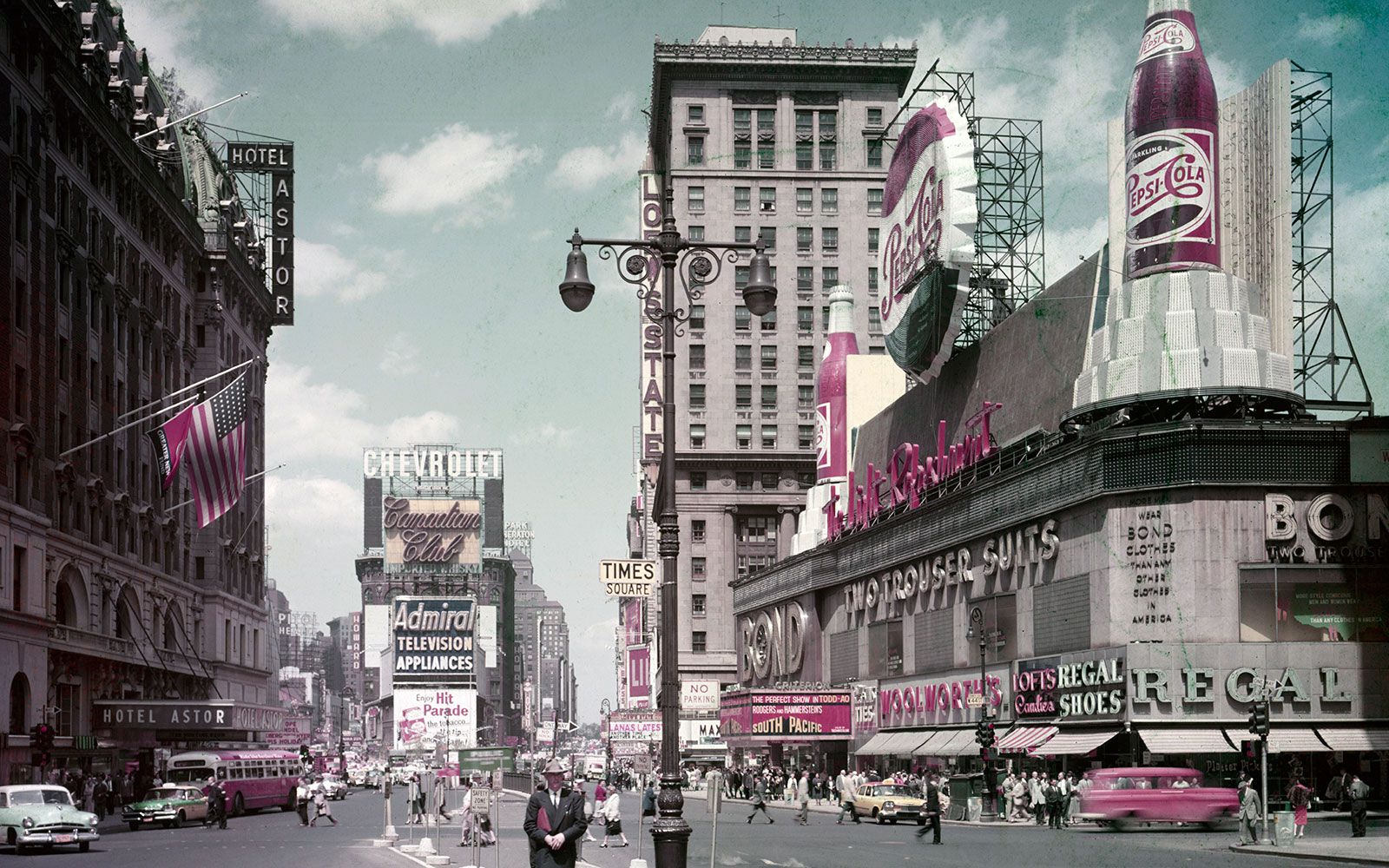
Let’s step into the hum of New York City in the 1950s, where the skyline reached upward and the sidewalks teemed with stories. This was a decade shaped by postwar confidence and contradictions—a city flush with promise, yet still shadowed by inequality and unrest.
Picture this: big band jazz slowly giving way to doo-wop harmonies on the streets of the Bronx. Kids playing stickball in alleys while Checker cabs jostle through Midtown traffic. The aroma of roasted chestnuts mingled with the bustle of shoppers crowding into department stores like Gimbels and Wanamaker’s.
Economically, the city was booming—Wall Street was climbing, factories were humming, and families fled to brand-new suburbs in Levittown. The subway still cost a dime, and Penn Station hadn’t yet been sacrificed for Madison Square Garden. But beneath that gloss, the cracks were forming: redlining, racial segregation, and labor unrest were present, especially in neighborhoods like Harlem, Bedford-Stuyvesant, and the Lower East Side.
Culturally, it was a golden age. Marilyn Monroe dazzled at the premiere of The Seven Year Itch in Midtown. Miles Davis lit up smoky clubs in Greenwich Village. The New York Yankees—led by Mantle, DiMaggio (early on), and Yogi Berra—were an empire unto themselves.
Manhattan in the 1950s was a city in the midst of complete transformation—a mosaic of old-world grit and sleek modern ambition. The skyline was rising fast, with architectural icons like the Seagram Building and Lever House ushering in the International Style: clean lines, glass façades, and a corporate cool that redefined Park Avenue.
But just a subway ride away from those steel towers, Greenwich Village pulsed with a different rhythm. Beat poets like Jack Kerouac and Allen Ginsberg held court in smoky cafés, where jazz riffs and radical ideas flowed freely. The Village was the cradle of counterculture, a place where rebellion wore a turtleneck and carried a notebook.
Meanwhile, Madison Avenue was booming with the golden age of advertising—think Mad Men in real life. Agencies crafted campaigns that shaped postwar consumerism, turning brands like Coca-Cola and Lucky Strike into cultural touchstones.
And then there was the street life: kids playing stickball in Hell’s Kitchen, garment workers hauling racks through Midtown, and the ever-present hum of elevated trains and Checker cabs. The old Penn Station still stood in all its Beaux-Arts glory, sunlight streaming through its vaulted glass roof, all the signs of the times.
Then let’s take a walk through Harlem in the 1950s—a neighborhood still echoing with the brilliance of the Harlem Renaissance, yet evolving into something new.
By the 1950s, Harlem’s jazz scene had shifted somewhat from its heyday in the 1920s and 1930s. While 52nd Street in Midtown had become the new epicenter for modern jazz, Harlem remained a cultural heartbeat for Black America. Legendary venues like the Apollo Theater still drew crowds, and Minton’s Playhouse—where bebop was born—remained a sacred ground for improvisation and innovation.
In 1958, Art Kane captured the iconic photograph A Great Day in Harlem, gathering 57 jazz legends—Dizzy Gillespie, Thelonious Monk, Count Basie, and more—on a stoop at 17 East 126th Street. Though Harlem was no longer the undisputed capital of jazz, that image immortalized its enduring spirit.
Beyond the music, Harlem in the ’50s was a place of contrasts. You had vibrant street life, soul food joints, and storefront churches alongside growing frustration over housing discrimination and economic inequality. The seeds of the Civil Rights Movement were being sown in barbershops, churches, and community centers.
Queens in the 1950s was a borough on the rise—a patchwork of neighborhoods transforming from farmland and trolley tracks into the American suburban dream.
After World War II, returning veterans and their families flocked to Queens for space, affordability, and a shot at homeownership. Neighborhoods like Flushing, Jackson Heights, Bayside, and Forest Hills saw a boom in tidy single-family homes, complete with white picket fences and backyard barbecues. It was the era of the G.I. Bill, and Queens became a magnet for upward mobility.
The streets buzzed with diversity. Greek bakeries, Italian pizzerias, Irish pubs, and Jewish delis lined the avenues. You could hear a dozen languages on a single block—immigrants from Europe, the Caribbean, and Latin America were laying down roots, creating a borough where cultural identity wasn’t just preserved, it was celebrated.
Transportation was key to its growth. The subway system expanded, buses crisscrossed the borough, and car ownership soared. Queens was no longer just a place to sleep—it was becoming a place to live, work, and play. Idlewild Airport (later renamed JFK in 1963) was already buzzing with international flights, hinting at the borough’s future as a global gateway.
And for leisure? Families flocked to Rockaway Beach in the summer, caught a ballgame at the Polo Grounds or Ebbets Field, and strolled through Flushing Meadows–Corona Park, still echoing with the legacy of the 1939 World’s Fair.