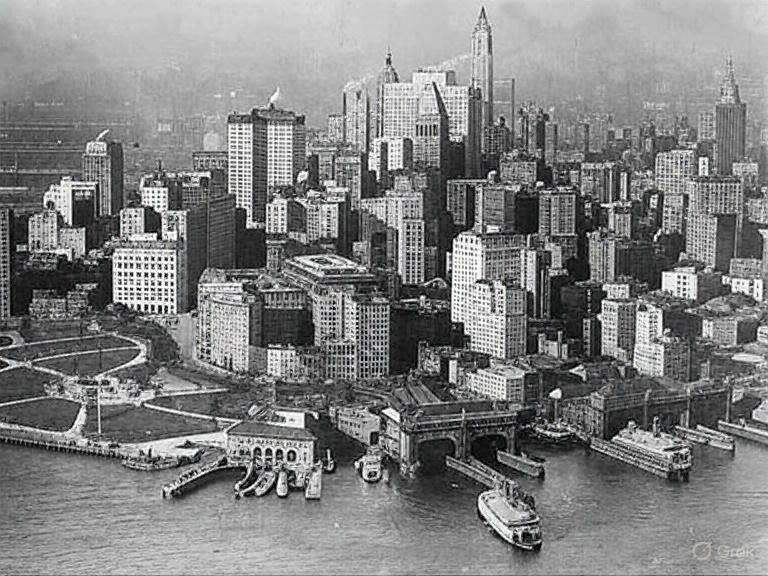
New York City in the 1940s
• Atmosphere: Wartime austerity followed by post-war optimism. Streets were crowded with soldiers on leave, factory workers, and families adjusting to rationing.
• Architecture: Art Deco skyscrapers like the Chrysler Building and Empire State dominated the skyline, but many neighborhoods still had tenements and brownstones.
• Street Life: Elevated trains rattled overhead, pushcarts lined the Lower East Side, and jazz clubs in Harlem pulsed with life.
• Fashion: Men in fedoras and double-breasted suits, women in tailored dresses with padded shoulders — practical but stylish.
New York City in the 1950s
• Atmosphere: A booming economy, suburban expansion, but the city remained the cultural capital. Times Square was neon-lit and bustling.
• Architecture: The skyline grew with modernist office towers, while neighborhoods saw the rise of public housing projects.
• Street Life: Automobiles became more dominant, but kids still played stickball in the streets. Rock ’n’ roll began echoing from jukeboxes.
• Culture: The Beat Generation gathered in Greenwich Village, while Broadway musicals defined entertainment.
New York City in the 1960s
• Atmosphere: A decade of transformation — civil rights marches, anti-war protests, and counterculture energy filled the streets.
• Architecture: The World Trade Center began construction, signaling a new era of skyscrapers. Lincoln Center opened as a cultural hub.
• Street Life: Hippies in Washington Square Park, soul and Motown blasting from radios, and a growing diversity of immigrant communities reshaping neighborhoods.
• Culture: Andy Warhol’s Factory, Bob Dylan in the Village, and boxing legends like Muhammad Ali electrified Madison Square Garden.
Walking through those decades, you’d feel the city’s pulse shift from wartime grit to postwar prosperity, then into revolutionary creativity and activism. Each era left its mark on the streets, the skyline, and the people.